
Capital District lawns and slopes
Hydroseeding in Albany, NY
Seed and fiber mulch sprayed in one pass, timed for a cool-season climate and matched to sand, silt or clay.
- No-charge yard walk-through, then an estimate in writing
- Seed mixes picked for sand, silt or clay soil
- Watering plan handed over with every new lawn
Seed That Fits Albany Ground
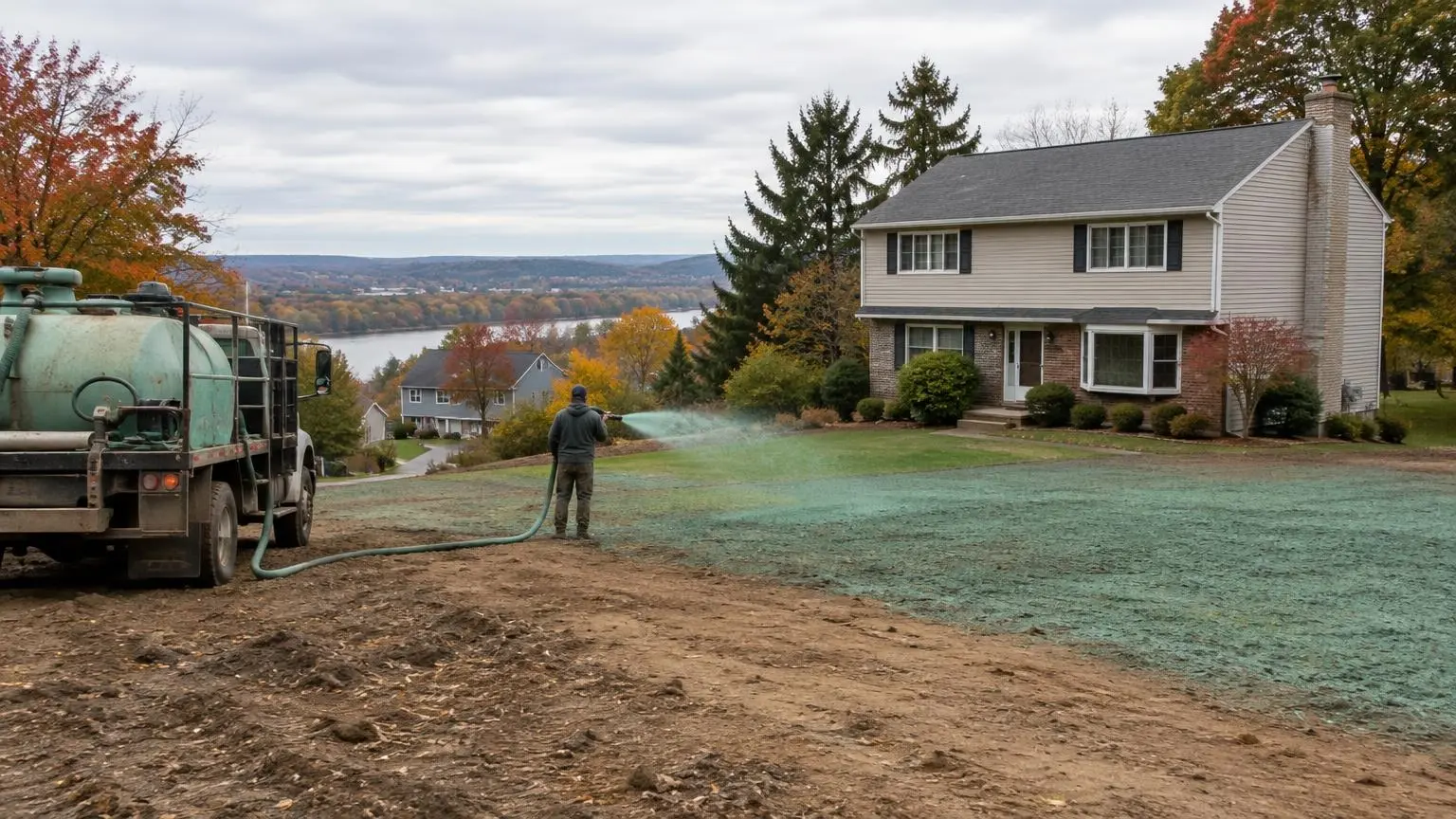
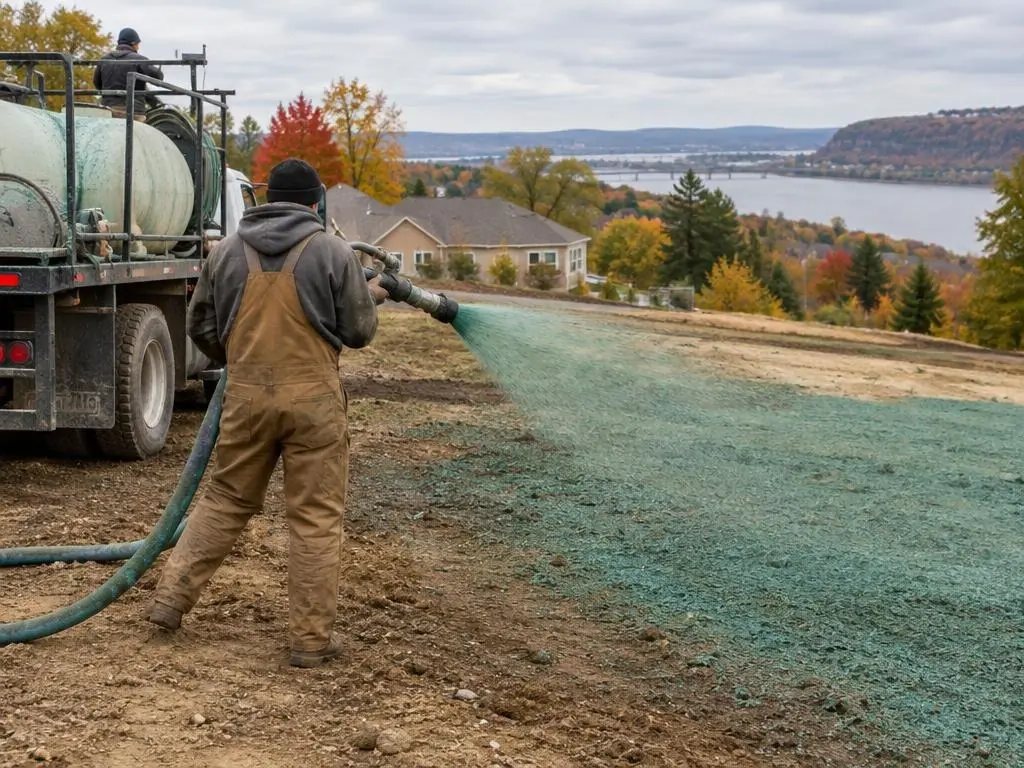
Hydroseeding in Albany comes down to two questions: what kind of soil is under the yard, and how many good growing weeks are left before the snow. Our tank holds water, grass seed, starter fertilizer, a tackifier and a mulch made from wood or paper fiber, and that mix is sprayed across ground that has already been prepared. Once it lands, the slurry clings to the soil, keeps the seed damp and stops rain from carrying it off while it germinates. For a new house, a torn-up yard after a sewer or drainage job, or a bare bank behind the garage, it is usually the most practical way to get grass established across Albany and the nearby towns.
Two kinds of dirt in one city
The interior of Albany is rolling ground that was once part of the Albany Pine Bush. Its soil is dry and sandy, a remnant of Glacial Lake Albany, which filled the Hudson Valley roughly 15,000 to 12,600 years ago and stretched about 160 miles from Poughkeepsie to Glens Falls. When the lake drained, it left dune and delta sands, with lenses of silt and clay mixed in. Under those sands sits lake-bottom silt and clay. In the river valleys the clay is closer to the surface. The USDA describes the Hudson soil series, which is extensive in the Mohawk and Hudson valleys, as silt loam over a firm, sticky, plastic silty clay subsoil with medium to very high runoff potential. Sand dries out in an afternoon. Clay stays wet and sheds rain. A hydroseed lawn has to be planned for whichever one your yard has, and plenty of lots in the Capital District have a bit of both.
What the weather allows
Albany International Airport averages 40.7 inches of precipitation over about 138 days a year, with snowfall near 59 inches. July is the wettest month, at about 4.55 inches, and much of that comes in summer storms that can rinse loose soil off a freshly graded lot. Winters bring nine or so nights at zero degrees or below, and summers bring about nine days at 90 or hotter. The city sits in plant hardiness zone 6a near downtown and the river and 5b at its western end. All of that favors cool-season turf. Our blends draw on Kentucky bluegrass, perennial ryegrass, and fine and tall fescues, mixed to match sun, shade and soil.
When to seed
Late summer into early fall is the window we like most. In September the airport averages daytime highs around 74 degrees, the soil is still warm from summer, and weeds slow down, so new grass gets several weeks of root growth before the ground freezes. Spring is the second choice. April still averages lows near 37 degrees and a little snow, so seed often waits for the soil to warm, and spring-seeded grass then has to survive its first July. Midsummer seeding works on irrigated lawns but costs more water. Late October and November are usually too late for a lawn; for a construction site that has to be stabilized before winter, we talk through mulch-only or blanket options instead. Get a free estimate
Hydroseed, sod or dry seed
Sod looks complete as soon as the last roll is laid, but it costs the most and the rolls have to knit into the soil below, which is slow on dry sand and on compacted clay. Dry seed broadcast with a spreader is the cheapest option, but the seed sits exposed to birds, wind and the first hard rain, and sprouting is slower. Hydroseeding lands in between on price. According to University of Nebraska Extension, hydroseeded grass generally shows up within 5 to 7 days, while dry seeding takes two to three weeks. The mulch layer is the reason: it keeps the seed damp and in place. On a slope or a large bare lot, that difference matters more than on a flat front yard.
Water, slopes and the storm drain
Albany's own map shows how much water shaped it. Foxes Creek, the Beaver Kill and the Rutten Kill were diverted underground in the 19th century, and the city drops from a high point of 378 feet near the Loudonville Reservoir to about 2 feet above sea level at the Hudson, which is still tidal here. Bare soil on a slope washes downhill into the street and the storm drain. On sites that disturb an acre or more, federal stormwater rules require erosion and sediment controls and call for disturbed areas to be stabilized when work stops for more than 14 days. Hydroseeding, hydromulch, erosion control blankets and silt fence are how that gets done. We handle both the lawn side and the site side of the work, so a builder lot can go from silt fence to finished grass with one crew.
More than a lawn crew
Not every call is a front yard. Builders need lots stabilized before closing, property managers need a washed-out bank fixed, and homeowners finishing a septic or drainage job need the trench line put back to grass. Our hydroseeding services cover new lawn installation, erosion control services for slopes and swales, silt fence and sediment control, grading and topsoil, and lawn repair. Some people search for hydro seeding, some for grass seeding or lawn seeding; it is the same goal either way, getting good grass to take on ground that is bare right now. When a job needs more than one of those pieces, one crew handles all of them in order.
What a typical job looks like
- A site visit to check the soil, slope, drainage and water access
- A written estimate with square footage, prep, seed mix and mulch rate
- Fine grading, rock raking and topsoil where the ground needs it
- Silt fence or blankets first, if the site needs them
- Hydroseed application in one pass, edges and slopes included
- A watering schedule and first-mow guidance in writing
After the truck leaves
The first three weeks decide most lawns. New seed needs the top of the soil kept damp. On Albany sand that can mean two or three short waterings on a warm day; on clay, water more lightly and less often so the seedbed does not turn to mud. Expect most hydroseed lawns to need a first mow at four to six weeks, when the blades reach roughly three to four inches. Until that first cut, keep people, dogs and the mower off the new grass. If a patch washes out after a hard storm, call us; touching up a small area early is easy, while waiting until the rest of the lawn is established is not.
Our Services
Six kinds of seeding, slope and dirt work for homeowners, builders and property managers around Albany.
New Lawn Hydroseeding
Full new lawns sprayed onto prepared soil for new homes, renovations and torn-up yards.
Learn more →Builder & Commercial Hydroseeding
Large-area seeding for builders, developers, municipalities and commercial properties.
Learn more →Slope Stabilization & Erosion Control
Banks, swales and ditches covered with hydromulch, a bonded fiber matrix, or erosion control blankets rolled out and pinned.
Learn more →Silt Fence & Inlet Protection
Sediment control for building sites and permits: silt fence installation and storm drain inlet protection.
Learn more →Yard Grading & Topsoil Prep
Dirt work, yard grading, topsoil and seedbed prep so new grass has something to grow in.
Learn more →Overseeding & Lawn Renovation
Overseeding thin or patchy lawns, spot repairs, and full renovation when a tired yard needs a fresh start.
Learn more →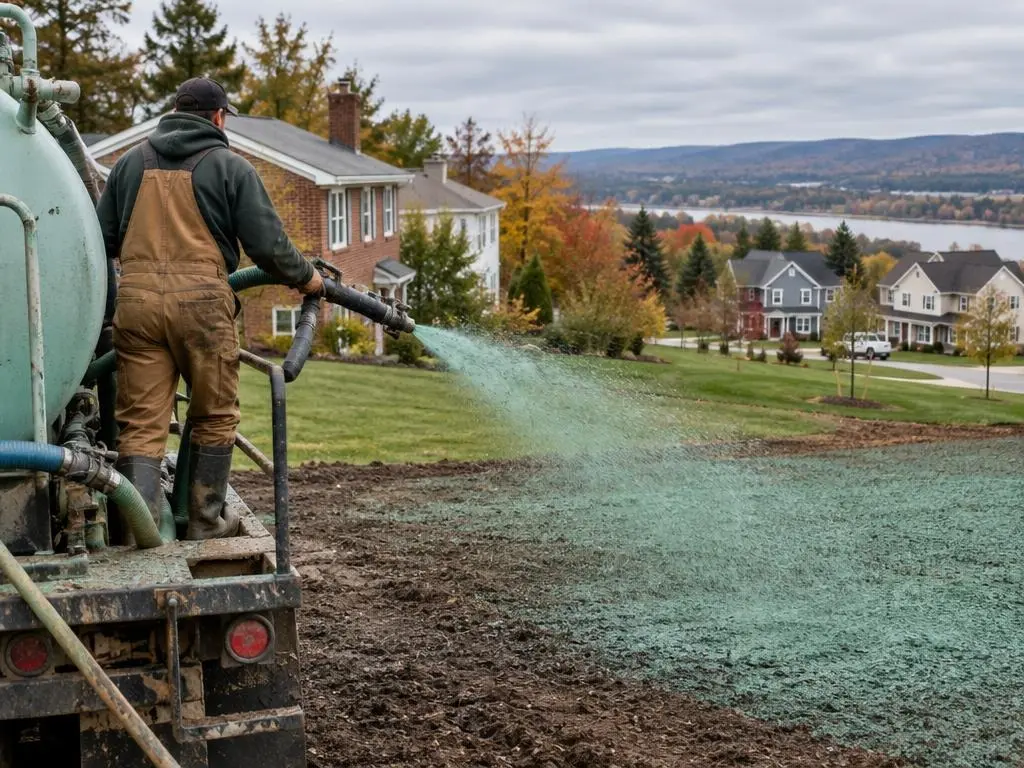
Towns We Seed Across the Capital District
We work in Albany and across Albany, Schenectady, Rensselaer and Saratoga counties. Colonie, Guilderland and the west side of the city share the sandy Pine Bush ground, where new grass needs help holding water. Bethlehem, New Scotland and Rotterdam bring more slope, creeks and gorges, while Schodack, East Greenbush, North Greenbush and Rensselaer sit on clay bluffs above the Hudson. North of the Mohawk, Clifton Park, Halfmoon, Malta, Ballston, Wilton and Saratoga Springs keep adding new subdivisions on old farm fields and sand plains, and Stillwater and Waterford sit along the rivers. Older yards in Schenectady, Niskayuna, Glenville, Troy, Cohoes and Brunswick are more often overseeding, repair and regrading work. Pick a town below for notes on the ground and conditions in that particular place.
- Hydroseeding in Albany, NY
- Hydroseeding in Colonie, NY
- Hydroseeding in Guilderland, NY
- Hydroseeding in Bethlehem, NY
- Hydroseeding in Clifton Park, NY
- Hydroseeding in Halfmoon, NY
- Hydroseeding in Malta, NY
- Hydroseeding in Saratoga Springs, NY
- Hydroseeding in Schenectady, NY
- Hydroseeding in Troy, NY
- Hydroseeding in Niskayuna, NY
- Hydroseeding in Glenville, NY
- Hydroseeding in Rotterdam, NY
- Hydroseeding in East Greenbush, NY
- Hydroseeding in North Greenbush, NY
- Hydroseeding in Brunswick, NY
- Hydroseeding in Ballston, NY
- Hydroseeding in Wilton, NY
- Hydroseeding in Cohoes, NY
- Hydroseeding in Waterford, NY
- Hydroseeding in Stillwater, NY
- Hydroseeding in Schodack, NY
- Hydroseeding in New Scotland, NY
- Hydroseeding in Rensselaer, NY
Why Homeowners Call Hydroseeding Albany
Soil before seed
We check whether a yard is Pine Bush sand, valley clay or builder fill before we pick a seed mix or mulch rate.
Honest timing
If it is too late in the fall for a lawn to root, we say so and offer winter stabilization instead.
Site work and lawns
Silt fence, grading, blankets and hydroseed from one crew, so nothing waits on another contractor.
Itemized estimates
Prep, topsoil, seed, mulch and erosion control appear as separate items on the estimate, so the cost of every part of the job is visible.
Common Questions
What is hydroseeding?
Hydroseeding is a way of planting grass by spraying a mix of seed, fiber mulch, fertilizer, a tackifier and water onto prepared soil. The mulch holds moisture and keeps the seed from washing or blowing away, so it usually sprouts faster and more evenly than dry seed spread by hand.
How much does hydroseeding cost in Albany?
Published national guides vary by source, putting residential hydroseeding somewhere between about $0.06 and $0.35 a square foot; HomeGuide's figure for a 5,000 square foot lawn is about $1,000 to $1,750. Most companies also set a minimum job charge. Grading, topsoil, slopes and blankets raise the total, which is why our written estimate comes after we have seen the site.
Is lawn hydroseeding expensive compared with sod?
No. University of Nebraska Extension puts its cost a little above dry seeding and usually below sod. HomeGuide lists installed sod at $1 to $4 a square foot, while its hydroseeding range runs about $0.12 to $0.35 per sq ft. What you give up is time: sod looks done the day it is laid, while a hydroseed lawn needs about four to six weeks before its first mow.
Which month is best to hydroseed a lawn around Albany?
Late August through September is usually the strongest window for cool-season grass here. The soil is still warm, nights are cooler and new grass has time to root before the ground freezes. Spring seeding after the soil warms is the second choice, but the young grass then has to make it through summer heat.
Can you hydroseed in late fall?
For a home lawn, late October and November usually do not leave enough growing time. For a construction site that must be stabilized before winter, we can apply hydromulch or blankets to hold the soil and seed again in spring or late summer.
How much watering does a freshly hydroseeded Albany yard need?
Keep the top of the soil damp for the first three weeks. On a warm day that often means two or three short waterings, and less on clay soil that stays wet. Once the grass is up and growing, water less often and more deeply.
Will hydroseed grow on sandy soil?
Yes, and the mulch layer actually helps on sand because it holds moisture against the seed. On very sandy Pine Bush lots we often suggest some topsoil or compost first and a closer watering schedule for the first few weeks.
Does a new house lot in Albany need silt fence?
Federal stormwater rules call for erosion and sediment controls on projects that disturb an acre or more, and on smaller pieces of a bigger development that together reach that size. Many towns also ask for silt fence on smaller lots near streams or storm drains. Your builder or town building department can tell you what the permit requires, and we install it.
Book a Free Site Visit in Albany
Tell us about the ground and we will tell you what it needs.